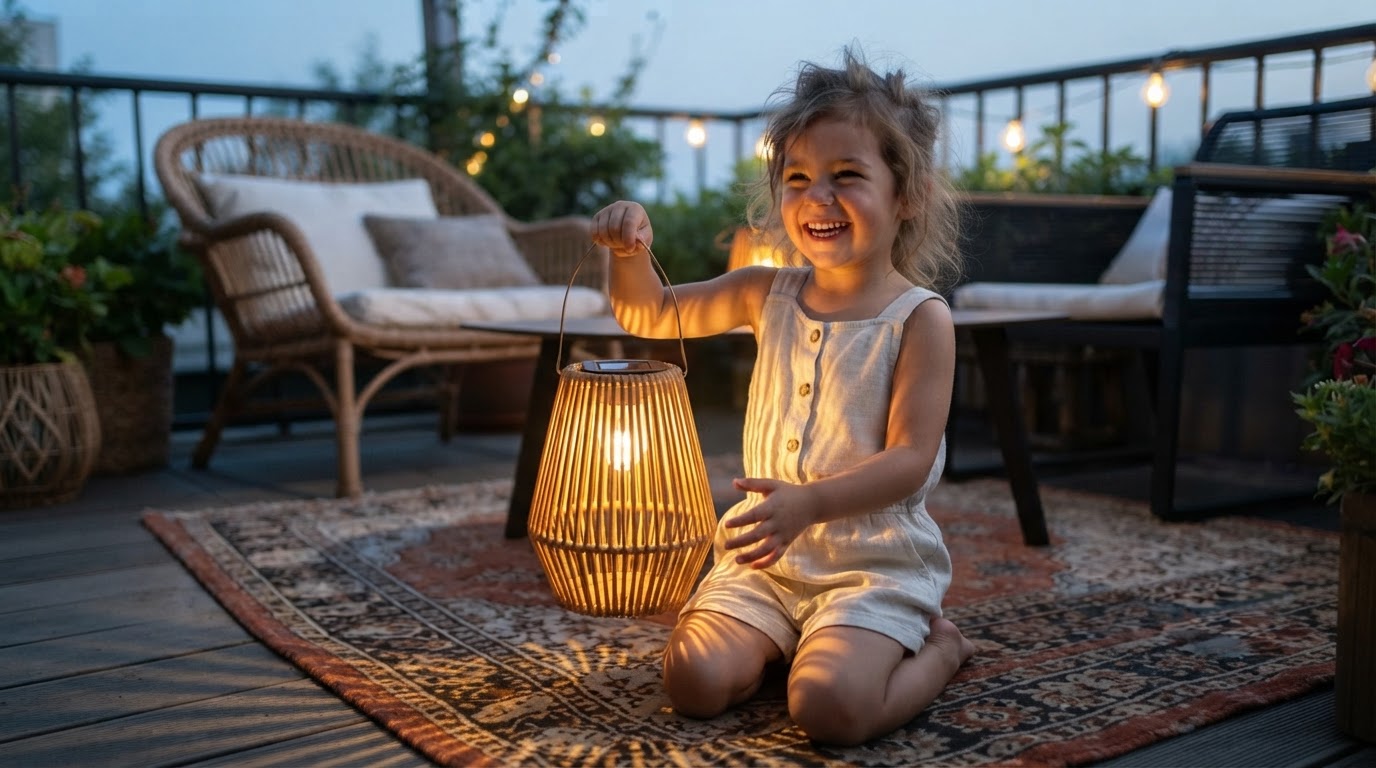
A 4-Step Setup for Handwoven Solar Lantern Patio Lighting
 Maya ChenContributing Editor
September 3, 2026 — The shift toward eco friendly patio lighting has reached a saturation point where aesthetic appeal often overrides technical efficiency, a trend the Handwoven Solar Lantern aims to correct through passive charging integration.
The conventional wisdom says that any solar-powered device is inherently green, yet this ignores the ecological impact of light color and placement. According to Vegan Design, eco-friendly outdoor lighting requires using amber LEDs at or below 2200 Kelvin to prevent disrupting local ecosystems, as anything exceeding that number indicates blue lighting which is far more intrusive. Many homeowners prioritize brightness over biological safety, inadvertently turning their sustainable outdoor patio lighting into a source of light pollution.
The 4-Step Efficiency Setup
Optimizing a patio for true sustainability requires more than just replacing wired fixtures with solar alternatives. First, orientation is the primary failure point. A Handwoven Solar Lantern must be positioned to receive a minimum of six hours of direct solar exposure to maintain its internal battery health; anything less leads to deep discharge cycles that shorten the lithium-ion lifespan. Second, height matters. While many hang lanterns at eye level, Tru-Scapes notes that best practices involve directing light downward whenever possible for paths and patios to minimize skyglow. Third, the density of fixtures should be calculated by the square footage rather than visual symmetry. Over-lighting a space, even with renewable energy, wastes the stored capacity of the cells. Finally, the integration of natural materials is essential. The Handwoven Solar Lantern utilizes artisanal textures that diffuse the LED output, reducing the harsh glare common in cheap plastic alternatives. Run the math: a single high-quality solar unit replacing a 40-watt incandescent bulb saves approximately 350 kWh over its functional life, assuming standard evening operation. This efficiency is only realized when the user avoids the trap of 'set it and forget it' maintenance. Dust accumulation on the solar panel can reduce charging efficiency by up to 30%, necessitating a monthly cleaning schedule to ensure the lantern operates at its peak rated capacity.
Expert tip: To maximize the lifespan of your lantern, ensure the internal LED remains within the 2700K range to replicate the soft yellow cast of incandescent bulbs while maintaining the energy-efficient profile of a low-voltage system.
Integrating these units into a broader landscape strategy can also provide meaningful [eco friendly garden gift ideas](/blog/eco-friendly-garden-gift-ideas). When selecting a sustainable outdoor decor gift, technical specs like IP waterproof ratings and battery chemistry should outweigh decorative patterns. Proper sustainable outdoor patio lighting is a matter of precision, not just procurement. By following these steps, the Handwoven Solar Lantern becomes a functional tool rather than a disposable accessory.
I'll change my mind when manufacturers provide transparent degradation data for their photovoltaic cells under high-heat conditions, but for now, these lanterns represent the most viable path for residential carbon reduction.
Sources
- Eco-Friendly Outdoor Lighting: Do's and Don'ts - Vegan Design
- Eco Friendly, Sustainable Lighting | Organic Modern Lighting
- More Glow, Less Guilt: A Homeowner's Guide to Eco ...